
Introduction
Any digital economy thrives on the flow of data across borders. However, recent years have seen an increase in data localisation mandates, laws that require data generated within a country's borders to be stored, processed, or managed within said country's borders. This is data localisation or data residency. It is based on the concept of data sovereignty. While often used interchangeably, data localisation, data residency, and data sovereignty carry subtle but important distinctions. The data collected would be subject to the laws and governance rules of the nation or region where it was collected.
Typically, the data can only be transferred after complying with local data protection, initially by obtaining consent from users and providing information to them on why the data is being taken and how it will be used. Proponents argue that this is essential for protecting national sovereignty, ensuring cybersecurity, and enforcing local data protection norms. Critics warn, however, that such measures could fragment the internet, reduce innovation, and harm global businesses.
Understanding Key Concepts
Data Sovereignty refers to the notion that data is governed by the laws of the country where it is collected or processed, regardless of where it is physically stored. It underscores a state's authority over digital assets within its jurisdiction.
Data Residency, on the other hand, focuses primarily on the physical location of the data. It is often associated with compliance requirements in cloud computing and international data transfer regimes.
Data Localisation, however, goes a step further by requiring certain categories of data, often sensitive or critical data, to be stored and processed exclusively within national borders. It is seen as a mechanism to exercise control, enforce privacy, and advance economic and strategic interests.
Importance of data localisation
For governments around the world, data localisation is seen as a strategic necessity. In the core of their policies, the required data is to be stored, processed, or managed within a country's physical borders as aforementioned. While it is often debated in the context of trade and technological innovation, data localisation serves several critical national and public interest goals.
- National security: Data localisation strengthens a state's ability to safeguard national interests in the face of foreign surveillance, cyber espionage, and cross-border data vulnerabilities.
- Data protection and privacy: Localisation mandates enable better enforcement of national data protection laws by ensuring that personal data is processed in accordance with domestic regulatory standards. Countries with robust data protection frameworks, such as India’s Digital Personal Data Protection Act, 2023 or the European Union’s General Data Protection Regulation (GDPR), benefit from enhanced supervisory capacity and increased accountability from data fiduciaries.
- Strengthening Consumer Trust and Institutional Accountability: Localisation, when implemented with transparency and oversight, serves as a confidence-building measure that reassures citizens and stakeholders about the security and lawful use of their personal and corporate information.
- Protection from Foreign Legal Regimes: Cross-border data flows often bring domestic data within the purview of foreign legal regimes, leading to potential conflicts of law and privacy violations. Data localisation acts as a jurisdictional safeguard, ensuring that domestic law governs the processing and storage of data, and that foreign legal requests do not override national privacy protections without appropriate bilateral or judicial processes.
Drawbacks of data localisation
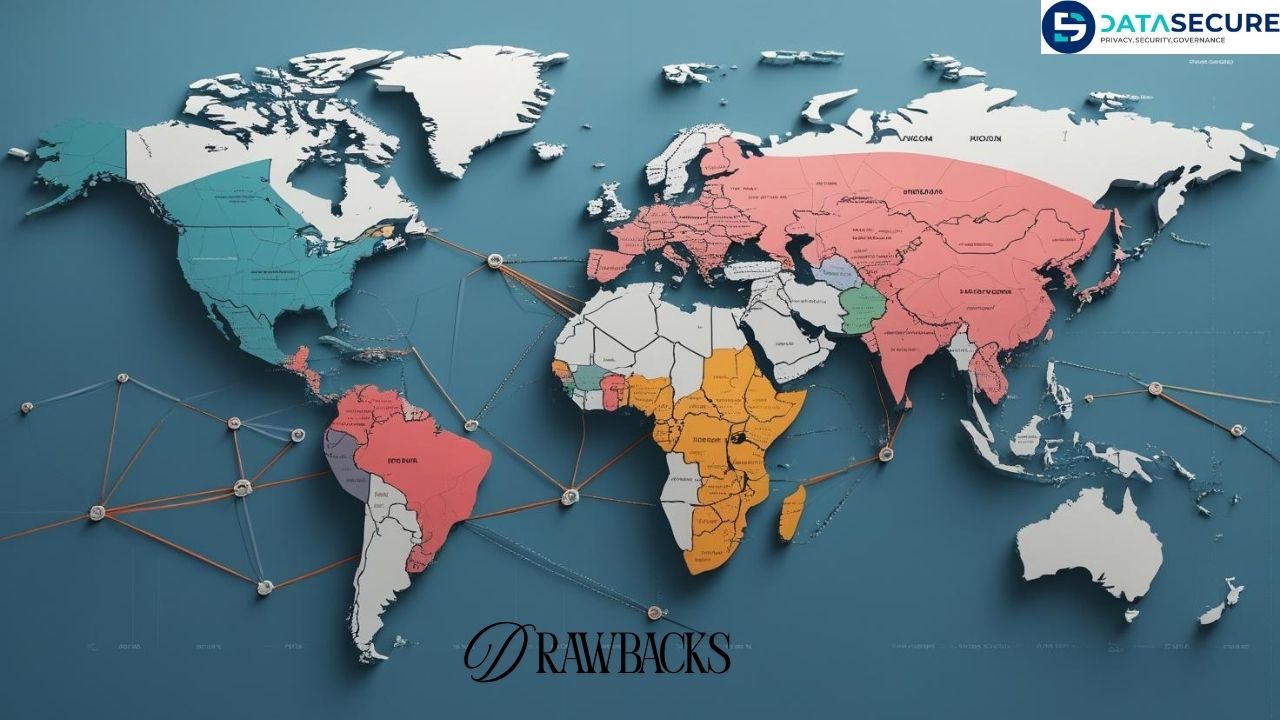
In an increasingly interconnected world, global innovation plays a pivotal role in shaping the trajectory of economic development, technological advancement, and societal progress. It refers to the collaborative generation and diffusion of new ideas, products, services, and processes across national borders. Despite the security rationale, data localisation raises several concerns for global innovation. One of them is ‘Reduced Efficiency and Innovation’. Data localisation forces data to be stored in less efficient environments, undermining real-time services like cloud computing, AI training, and financial transactions. It also becomes a barrier to cross-border collaborations, which might lead to retaliatory regulations and trade disputes.
India began showing intent to localise data with:
- The RBI’s 2018 directive requires all payment system data to be stored exclusively in India.
- The Draft Personal Data Protection Bill (2019), which later evolved into the Digital Personal Data Protection (DPDP) Act, 2023.
- Sectoral guidelines from authorities like SEBI, TRAI, and the Ministry of Electronics and IT.
The DPDP Act, 2023, allows cross-border transfer of personal data only to “trusted” countries, to be notified by the government. It also gives the government powers to restrict such transfers for reasons of state interest or public order.
Balancing Data Localisation with Global Trade and Innovation

Achieving an optimal equilibrium between data localisation and the unrestricted movement of data is a significant problem for policymakers. Transparent and consistent rules are crucial for enterprises to develop strategies and adhere to data localisation mandates. Regulatory flexibility, including provisions for data mirroring or conditional cross-border transfers, can alleviate certain adverse effects on trade and innovation.
International collaboration and the establishment of global standards are equally significant. Participating in discussions and treaties with other nations can aid in aligning data protection standards and promoting data transfers. This may mitigate the risk of regulatory fragmentation and foster a more cohesive global digital economy. Bilateral and multilateral data protection agreements can establish a framework for acknowledging equal data protection standards, hence diminishing the necessity for rigorous localisation safeguards.
Investment in digital infrastructure constitutes another critical consideration. Facilitating the establishment of local data centres and digital infrastructure can fulfil localisation mandates while also fostering economic expansion and technical advancement. Public-private partnerships and investment incentives in digital infrastructure can improve capacity and resilience, thereby advancing the objectives of digital sovereignty and economic development.
Privacy and security considerations must remain a primary emphasis. Guaranteeing comprehensive data protection, irrespective of data storage locations, is crucial for establishing confidence and enabling data transfers. This entails the implementation of robust encryption standards, periodic audits, and adherence to international data protection norms. Robust data protection methods can alleviate security and privacy concerns, diminishing the perceived necessity for stringent localisation.
Ultimately, fostering SMEs and startups is essential for sustaining a vibrant and competitive digital economy. Smaller enterprises may encounter significant obstacles in adhering to data localisation mandates, thereby hindering their capacity for innovation and competition. Offering support via grants, subsidies, or technical assistance can aid SMEs and startups in fulfilling regulatory obligations, thereby promoting a more inclusive and competitive marketplace.
Global Viewpoints and Contrasts
India's data localisation policies can be juxtaposed with those of other nations, underscoring varying regulatory ideologies and their consequences. The European Union (EU), under its General Data Protection Regulation (GDPR), has established rigorous data protection rules; nevertheless, it does not require data localisation. The GDPR permits the transfer of personal data to non-EU countries, contingent upon the establishment of suitable data protection measures. This strategy reconciles the necessity for data protection with the advantages of cross-border data flows, fostering innovation and international commerce.
China has instituted comprehensive data localisation mandates within its cybersecurity legislation, especially for sectors deemed vital to national security. These efforts constitute a comprehensive campaign to establish dominance over digital infrastructure and data flows, mirroring apprehensions regarding national security and data sovereignty. China's strategy has resulted in considerable investment in local digital infrastructure, although it has also prompted apprehensions regarding market access for international enterprises and the possible suppression of innovation.
Russia's data localisation legislation mandates that the personal data of its people be retained within national borders. This initiative, designed to bolster data sovereignty and security, has encountered criticism for elevating compliance expenses and complicating international commercial activities. Similar to India, Russia's strategy exemplifies the conflict between data privacy goals and the necessity for a transparent and competitive digital economy.
These global instances offer significant insights into the prospective advantages and obstacles of data localisation. Although localisation can improve data privacy and bolster national interests, it may also impose trade restrictions, elevate costs, and hinder technological progress, and so, reconciling these factors is essential for nations aiming to establish robust data protection frameworks.
Conclusion
The debate over data localisation and sovereignty vis-à-vis global innovation reflects a broader tension between national control and international cooperation in the digital era. On one hand, data localisation is rooted in legitimate state interests, ensuring national security, regulatory oversight, and protection of citizens’ privacy. On the other hand, excessive localisation measures risk creating digital silos, hampering the free flow of information, and undermining the collaborative nature of global innovation.
Striking a careful balance between these competing imperatives is essential. Policymakers must adopt a pragmatic approach that respects national interests without stifling cross-border technological progress. This includes investing in local infrastructure, promoting international standards, ensuring robust data protection irrespective of storage location, and facilitating compliance mechanisms for startups and smaller enterprises. A nuanced, interoperable framework, grounded in trust, transparency, and cooperation, can ensure that data governance supports both sovereign priorities and a thriving global digital ecosystem.
We at Data Secure (Data Privacy Automation Solution) DATA SECURE - Data Privacy Automation Solution can help you to understand EU GDPR and its ramificationsand design a solution to meet compliance and the regulatoryframework of EU GDPR and avoid potentially costly fines.
We can design and implement RoPA, DPIA and PIA assessments for meeting compliance and mitigating risks as per the requirement of legal and regulatory frameworks on privacy regulations across the globe especially conforming to GDPR, UK DPA 2018, CCPA, India Digital Personal Data Protection Act 2023. For more details, kindly visit DPO India – Your outsourced DPO Partner in 2025 (dpo-india.com).
For any demo/presentation of solutions on Data Privacy and Privacy Management as per EU GDPR, CCPA, CPRA or India DPDP Act 2023 and Secure Email transmission, kindly write to us at info@datasecure.ind.in or dpo@dpo-india.com.
For downloading the various Global Privacy Laws kindly visit the Resources page of DPO India - Your Outsourced DPO Partner in 2025
We serve as a comprehensive resource on the Digital Personal Data Protection Act, 2023 (Digital Personal Data Protection Act 2023 & Draft DPDP Rules 2025), India's landmark legislation on digital personal data protection. It provides access to the full text of the Act, the Draft DPDP Rules 2025, and detailed breakdowns of each chapter, covering topics such as data fiduciary obligations, rights of data principals, and the establishment of the Data Protection Board of India. For more details, kindly visit DPDP Act 2023 – Digital Personal Data Protection Act 2023 & Draft DPDP Rules 2025
We provide in-depth solutions and content on AI Risk Assessment and compliance, privacy regulations, and emerging industry trends. Our goal is to establish a credible platform that keeps businesses and professionals informed while also paving the way for future services in AI and privacy assessments. To Know More, Kindly Visit – AI Nexus Your Trusted Partner in AI Risk Assessment and Privacy Compliance|AI-Nexus