Introduction: Health Data as a Strategic Asset
In the digital age, health data has emerged as one of the most sensitive and valuable types of personal data. With India's ambitious plans to digitize healthcare through the Ayushman Bharat Digital Mission (ABDM) and its ABHA (Ayushman Bharat Health Account) framework, along with the regulatory oversight of the Digital Personal Data Protection Act 2023 & Draft DPDP Rules 2025, there is a growing need for harmonized compliance. Organizations operating in India’s health tech sector — from startups and hospitals to insurers and digital platforms — must now align with a trifecta of frameworks: NDHM, DPDPA, and ABHA.
This article explores the convergence of these frameworks, highlights the risks and opportunities they create, and offers a practical roadmap for compliance.
1. The Key Pillars: What Are NDHM, DPDPA, and ABHA?
1.1 NDHM / ABDM (National Digital Health Mission / Ayushman Bharat Digital Mission)
Launched in 2020, NDHM (now called ABDM) aims to create a national digital health ecosystem. It includes:
- Unique Health IDs (ABHA)
- A federated Health Information Exchange (HIE)
- Consent-driven data sharing
- Registries of healthcare professionals and facilities
The mission is governed by NDHM Health Data Management Policy (HDMP) which lays out privacy, consent, and data security protocols.
DPDPA (Digital Personal Data Protection Act, 2023)
India’s first comprehensive data protection law, Digital Personal Data Protection Act 2023 & Draft DPDP Rules 2025, introduces:
- Legal basis for data processing: consent and deemed consent
- Rights of data principals (individuals)
- Duties of data fiduciaries (organizations processing data)
- Significant financial penalties for non-compliance (up to ₹250 crore)
Digital Personal Data Protection Act 2023 & Draft DPDP Rules 2025 applies to all sectors, including healthcare, with special sensitivity for biometric and health data, classed as sensitive personal data under legacy frameworks.
1.3 ABHA (Ayushman Bharat Health Account)
ABHA is a key component of NDHM, assigning every individual a 14-digit unique Health ID that enables:
- Interoperability across hospitals, diagnostic labs, and health apps
- Access to a Personal Health Record (PHR)
- Consent-driven sharing of health data via Health Information Users (HIUs) and Health Information Providers (HIPs)
ABHA is voluntary but increasingly seen as a gateway to digital health services.
2. Why Alignment Matters: The Compliance Imperative

Organizations are grappling with the following compliance intersections:
- ABHA and ABDM are ecosystem frameworks, providing structure for interoperability, consent, and governance.
- Digital Personal Data Protection Act 2023 & Draft DPDP Rules 2025 is a legal framework, defining rights, lawful grounds of processing, and penalties. >
- Misalignment can lead to regulatory conflict, reputational damage, and legal exposure.
For instance, an ABDM-compliant app collecting health data without granular consent under Digital Personal Data Protection Act 2023 & Draft DPDP Rules 2025 may still be non-compliant.
3. Core Overlaps and Differences: A Framework Comparison
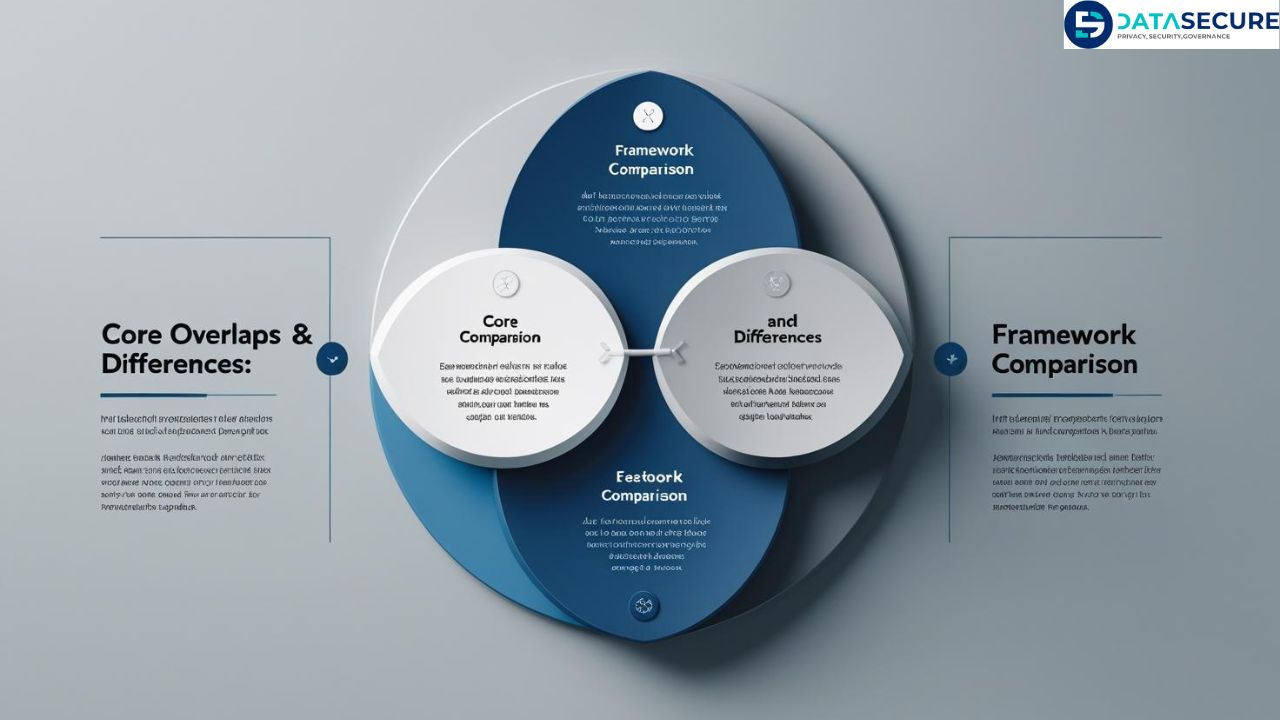
| Feature | NDHM/ABDM (HDMP) | DPDPA 2023 | ABHA |
|---|---|---|---|
| Legal Basis for Processing | Explicit consent only | Consent + Deemed Consent | Consent-based |
| Regulator | NHA (National Health Authority) | Data Protection Board of India | NHA |
| Data Subject Rights | Limited (withdrawal, portability) | Full suite (access, correction, grievance) | Partial (via consent manager) |
| Penalties | None prescribed | Up to ₹250 crore | Policy sanctions only |
| Scope | Health data only | All personal data | Digital health ecosystem |
| Consent Mechanism | >Digital Consent Manager | Fiduciary-driven | NDHM Gateway |
| Storage | Federated architecture | No specific mandate, but secure storage required | Federated, decentralized |
4. Key Challenges in Alignment
4.1 Fragmented Governance
- ABDM is policy-based, whereas Digital Personal Data Protection Act 2023 & Draft DPDP Rules 2025 is statutory.
- Private entities must straddle NHA guidelines and legal mandates from MeitY and the Data Protection Board.
4.2 Consent Duality
- NDHM requires purpose-specific, time-bound consent via a consent manager.
- Digital Personal Data Protection Act 2023 & Draft DPDP Rules 2025 allows for “deemed consent” in certain scenarios (e.g., emergencies, public health).
This creates grey zones — e.g., can deemed consent under Digital Personal Data Protection Act 2023 & Draft DPDP Rules 2025 override a revoked consent under ABDM?
4.3 Cross-System Interoperability
- HIPs and HIUs must ensure data flows between legacy systems and ABHA-linked platforms.
- Lack of ABHA ID standardization in private hospitals limits seamless integration.
5. Impact on Stakeholders
5.1 For Startups and Health Tech Firms
- Must >embed ABHA onboarding as part of KYC flows
- Need consent orchestration engines to manage Digital Personal Data Protection Act 2023 & Draft DPDP Rules 2025 and NDHM compliance simultaneously
- Investment in cybersecurity, audit trails, and access logs is now non-negotiable
5.2 For Hospitals and Clinics
- Transition to electronic health records (EHRs) aligned with ABDM standards
- Appoint or train a Grievance Officer / DPO under Digital Personal Data Protection Act 2023 & Draft DPDP Rules 2025
- Must integrate ABHA workflows and ensure staff awareness of consent protocols
5.3 For Insurers and TPAs
- Claims data processing must respect Digital Personal Data Protection Act 2023 & Draft DPDP Rules 2025's purpose limitation
- Participation in ABHA ecosystem opens access to structured health data — but increases compliance burden
- Need safeguards to avoid unauthorized profiling or denial of services
5.4 For CXOs and Boardroom Leaders
- Health data governance is now a board-level risk
-
Strategic decisions must factor in:
- Cross-border data flows and localization
- Vendor due diligence (e.g., cloud providers, analytics firms)
- Incident response readiness in case of breaches
- Potential reputational and financial fallout from a ₹250 crore fine necessitates Digital Personal Data Protection Act 2023 & Draft DPDP Rules 2025 readiness programs
6. The Role of the Data Protection Officer (DPO)

With Digital Personal Data Protection Act 2023 & Draft DPDP Rules 2025 enforcement expected by late 2025, appointing a DPO or equivalent is mission critical. Their duties will include:
- Mapping data flows across ABDM and DPDPA frameworks
- Conducting Data Protection Impact Assessments (DPIAs) for high-risk processing
- Liaising with both NHA and Data Protection Board
- Driving privacy awareness training
The DPO becomes a linchpin in ensuring health data alignment across frameworks.
7. Roadmap for Harmonization
Step 1: Conduct a Privacy Impact Assessment (PIA)
- Evaluate where ABHA-linked and non-ABHA health data is processed
- Identify gaps in consent, storage, access control, and breach readiness
Step 2: Build Unified Consent Infrastructure
- Ensure that Digital Personal Data Protection Act 2023 & Draft DPDP Rules 2025-compliant consent notices are integrated into NDHM workflows
- Leverage APIs provided by the NDHM Gateway for real-time consent status tracking
Step 3: Establish a Data Governance Council
- Involve legal, compliance, IT, and product teams
- Define SOPs for consent withdrawal, data erasure, and grievance redressal
Step 4: Update Vendor Contracts
- Include Digital Personal Data Protection Act 2023 & Draft DPDP Rules 2025-mandated clauses for processors handling health data Ensure partners are NDHM/ABHA-certified where applicable
Step 5: Prepare for Enforcement
- Build incident management protocols
- Set up logs, audit trails, and breach notification processes
- Define escalation matrix involving both NHA and Data Protection Board
8. Looking Ahead: Strategic Opportunities
Digital Trust as a Differentiator
Consumers are becoming privacy aware. Firms that align with Digital Personal Data Protection Act 2023 & Draft DPDP Rules 2025 and ABHA can:
- Build patient trust and loyalty
- Unlock access to government datasets for research and analytics
- Attract impact investors and global health partnerships
Innovation Through Compliance
NDHM's open standards and APIs allow health tech firms to build:
- AI-based diagnostics
- Remote care platforms
- Smart insurance underwriting
…but innovation must be privacy by design, not by accident.
9. Frequently Asked Questions (FAQs)
Q1. Is ABHA registration mandatory under DPDPA?
No. ABHA is voluntary. DPDPA does not mandate ABHA but requires consent for all personal data processing.
Q2. Can I process patient data under “deemed consent” for research?
Only if the research purpose is in public interest and meets the Digital Personal Data Protection Act 2023 & Draft DPDP Rules 2025's standards. Otherwise, explicit consent is required.
Q3. What happens if NDHM consent is revoked but DPDPA deemed consent applies?
Organizations must evaluate the legal basis carefully. Where conflict arises, individual rights typically take precedence.
Conclusion: Time to Align, Not Just Comply
India's healthcare digitization offers immense opportunity, but it comes with the weight of responsibility. ABHA and NDHM are enablers; Digital Personal Data Protection Act 2023 & Draft DPDP Rules 2025 is the enforcer. Organizations must not treat them in silos.
Leaders must champion privacy as a cultural value — not just a legal checkbox. Alignment is not just about compliance; it’s about securing patient trust, future-proofing digital infrastructure, and driving ethical innovation in one of the most sensitive domains: human health.
Sources:
1. The Digital Personal Data Protection Act 2023, (DPDPA)
- Government of India Gazette Notification
- Source: MeitY Official PDF – Digital Personal Data Protection Act 2023
2. National Health Authority – NDHM Health Data Management Policy (HDMP), Version 1.0 (December 2020)
- Lays down consent architecture, data storage, and role-based access for ABDM ecosystem
- Source: NHA HDMP Official Policy PDF
3. National Digital Health Blueprint (NDHB) – Ministry of Health and Family Welfare
- Source: NDHB Policy Document
4. ABDM Website & Developer Resources
- Technical guides, APIs for ABHA ID, consent manager, HIU/HIP integration
- Source: ABDM Official Website
🧑⚖️ Regulatory and Legislative Commentary
5. PRS Legislative Research – Summary & Analysis of DPDPA 2023
- Legal interpretation of rights, duties, and deemed consent
- Source: PRS India – DPDPA Analysis
6. Latham & Watkins LLP – Comparative Note: DPDPA vs GDPR
- Explains penalties, fiduciary duties, and enforcement structure
- Source: Latham & Watkins Report (PDF)
📚 Explanatory Articles and Industry Commentary
7. PrivacyDesk India – Analysis of NDHM’s Health Data Management Policy
- Source: PrivacyDesk Article
8. The Dialogue – Civil Society Feedback on NDHM HDMP
- Response to data minimization and consent standards
- Source: The Dialogue NDHM Policy Comments
9. NHA Sandbox Documentation (ABHA and Consent Manager APIs)
- Technical and operational integration guidance for health-tech developers
- Source: ABDM Sandbox Documentation
📊 Official Ecosystem Portals
10. Health Facility Registry & Professional Registry
- Real-time lookup for HIPs, HIUs, and verified hospitals
- Source: https://facility.abdm.gov.in
11. ABHA Mobile App & NDHM PHR App
- Demonstrates patient-centric health data access
- Source: [Google Play Store / iOS App Store – NDHM PHR & ABHA App]
🔍 Optional Technical Reading (For Advanced Practitioners)
12. India Stack APIs (relevant for ABHA/NDHM data exchange)
- Source: https://indiastack.org
13. HL7® FHIR® Standards for Healthcare Interoperability
- Basis for EHR integration under ABDM
- Source: https://www.hl7.org/fhir
We at Data Secure (Data Privacy Automation Solution) DATA SECURE - Data Privacy Automation Solution can help you to understand EU GDPR and its ramificationsand design a solution to meet compliance and the regulatoryframework of EU GDPR and avoid potentially costly fines.
We can design and implement RoPA, DPIA and PIA assessments for meeting compliance and mitigating risks as per the requirement of legal and regulatory frameworks on privacy regulations across the globe especially conforming to GDPR, UK DPA 2018, CCPA, India Digital Personal Data Protection Act 2023. For more details, kindly visit DPO India – Your outsourced DPO Partner in 2025 (dpo-india.com).
For any demo/presentation of solutions on Data Privacy and Privacy Management as per EU GDPR, CCPA, CPRA or India DPDP Act 2023 and Secure Email transmission, kindly write to us at info@datasecure.ind.in or dpo@dpo-india.com.
For downloading the various Global Privacy Laws kindly visit the Resources page of DPO India - Your Outsourced DPO Partner in 2025
We serve as a comprehensive resource on the Digital Personal Data Protection Act, 2023 (Digital Personal Data Protection Act 2023 & Draft DPDP Rules 2025), India's landmark legislation on digital personal data protection. It provides access to the full text of the Act, the Draft DPDP Rules 2025, and detailed breakdowns of each chapter, covering topics such as data fiduciary obligations, rights of data principals, and the establishment of the Data Protection Board of India. For more details, kindly visit DPDP Act 2023 – Digital Personal Data Protection Act 2023 & Draft DPDP Rules 2025
We provide in-depth solutions and content on AI Risk Assessment and compliance, privacy regulations, and emerging industry trends. Our goal is to establish a credible platform that keeps businesses and professionals informed while also paving the way for future services in AI and privacy assessments. To Know More, Kindly Visit – AI Nexus Home|AI-Nexus